

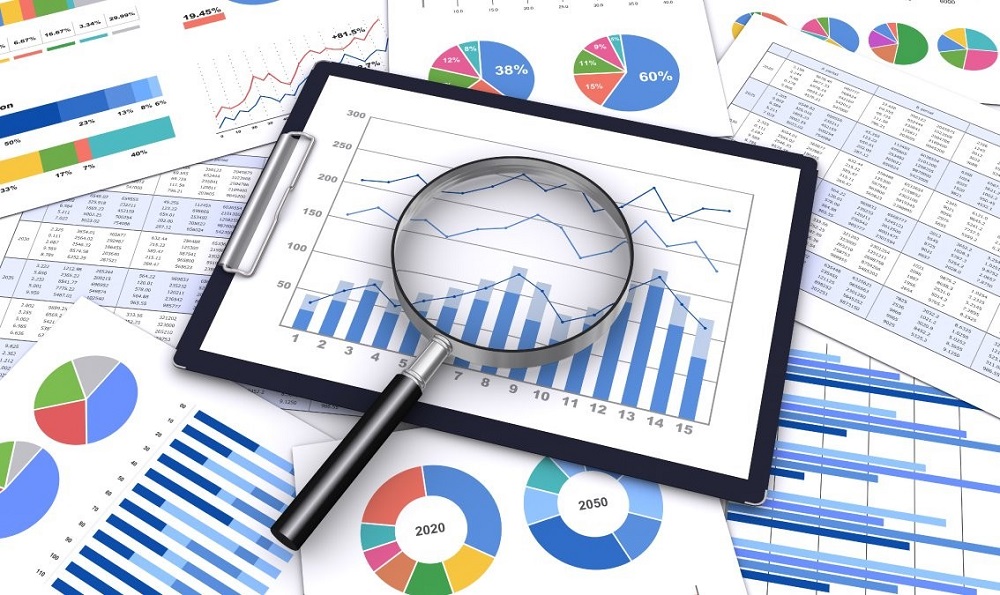
The days of relying purely on executive intuition or historical precedent to guide a multi-million-dollar enterprise are rapidly drawing to a close. In the modern business environment, an organization’s survival depends on its ability to collect, interpret, and act upon vast quantities of information. Data analytics has shifted from being a specialized software function hidden within the information technology department to becoming the foundational engine that drives high-level corporate strategy across every major global industry.
When data structures are utilized properly, they remove the guesswork from operational management. Enterprises that implement robust analytical workflows can easily identify hidden operational friction points, anticipate complex market shifts, optimize resource deployment, and predict consumer behavior with remarkable accuracy. Organizations that make this transition outperform their gut-driven competitors in revenue growth, asset optimization, and long-term capital efficiency.
The Analytical Spectrum: From Hindsight to Foresight
Understanding data analytics requires looking past simple database storage. True business intelligence relies on a progressive hierarchy of analytical capabilities. Each level requires more sophisticated software and talent, but it simultaneously delivers exponentially higher strategic value to decision-makers.
Descriptive Analytics: What Happened?
Descriptive analytics forms the baseline of corporate reporting. It aggregates raw historical data from sales ledgers, inventory systems, and website traffic logs to summarize past performance. Through monthly revenue spreadsheets, operational dashboards, and simple year-over-year comparisons, descriptive analytics gives leaders a clear snapshot of where the company has been. While vital for compliance and baseline tracking, it offers no explanation as to why specific trends occurred.
Diagnostic Analytics: Why Did It Happen?
Once a business recognizes a pattern or an anomaly in its historical data, it deploys diagnostic analytics to isolate the root cause. This process involves deep-dive data mining, drill-down queries, and correlation analysis. For instance, if a retail chain notes a sudden ten percent drop in sales in a specific territory, diagnostic analytics can cross-reference shipping logs, regional competitor pricing, and local macroeconomic factors to determine exactly why customers drifted away.
Predictive Analytics: What Will Happen?
Predictive analytics shifts the executive focus from the past to the future. By feeding vast historical datasets into advanced statistical algorithms and machine learning models, businesses can calculate the probability of future outcomes. E-commerce platforms use these models to forecast seasonal demand fluctuations, manufacturing plants use them to predict equipment failures before they happen, and financial institutions use them to score credit risks for loan applicants.
Prescriptive Analytics: How Can We Make It Happen?
Prescriptive analytics represents the pinnacle of data-driven decision-making. Instead of merely predicting a future scenario, prescriptive software models simulate dozens of distinct choices, weighing the risks and operational constraints of each path to recommend the absolute best course of action. Supply chain logistics networks use prescriptive systems to automatically reroute distribution fleets in real time based on changing weather patterns, fuel prices, and port delays.
Revolutionizing Core Operational Segments
The integration of data analytics changes the daily workflows and strategic priorities of every internal department within a enterprise, replacing vague estimations with concrete numbers.
Precision Marketing and Audience Segmentation
Traditional mass marketing campaigns are notoriously inefficient, often wasting huge portions of the advertising budget on consumers who have no interest in the product. Data analytics transforms marketing into a precision science. By tracking web interactions, purchase histories, and demographic markers, data platforms group consumers into hyper-specific micro-segments. Marketing teams can then deliver personalized ad copy and targeted product recommendations to the exact individuals most likely to buy, driving conversion rates higher while reducing overall customer acquisition costs.
Supply Chain Optimization and Inventory Management
Maintaining too much inventory ties up vital working capital and increases storage costs, while holding too little leads to stockouts, delayed orders, and frustrated clients. Data analytics solves this balancing act by continuously analyzing real-time sales velocity, supplier lead times, transport conditions, and manufacturing capacities. This end-to-end visibility allows operations managers to practice just-in-time inventory fulfillment, reducing warehouse overhead while keeping fulfillment rates high.
Workforce Management and Talent Analytics
Human resources departments utilize talent analytics to optimize recruitment, productivity, and employee retention strategies. By evaluating data points surrounding employee onboarding speeds, performance metrics, and historical turnover trends, companies can identify the specific environmental and behavioral markers that lead to long-term employee success. Furthermore, predictive models can flag when a high-performing employee is displaying signs of burnout or disengagement, allowing management to intervene with supportive measures before the individual decides to leave the company.
Strategic Operational Best Practices for Implementation
Building a data-driven culture requires careful operational execution. Simply purchasing expensive software will not yield results if the underlying infrastructure is flawed.
-
Break Down Data Silos: Ensure that information flows freely between the marketing, sales, accounting, and logistics departments. When departments keep their data locked inside isolated legacy systems, the business cannot form a complete, cohesive view of the customer journey or operational pipelines.
-
Enforce Strict Data Governance: Establish clear internal protocols regarding data cleanliness, standardized naming conventions, and secure storage access. If the raw data entered into an analytical system is inaccurate, incomplete, or corrupted, the resulting strategic insights will be inherently flawed.
-
Cultivate Internal Data Literacy: Invest in training programs that teach non-technical managers and front-line supervisors how to interpret basic data dashboards and translate charts into actionable daily decisions. An analytical model is only valuable if the people on the ground understand how to apply its findings.
Navigating the Ethical and Compliance Landscape
As industries collect more granular data, leaders must carefully balance commercial utility with strict regulatory compliance and consumer privacy protections.
Modern data management requires absolute adherence to shifting global frameworks such as the General Data Protection Regulation and the California Consumer Privacy Act. Organizations must implement robust anonymization techniques, secure encryption protocols, and clear data minimization policies, ensuring they only collect information that is explicitly necessary for operational execution. Ethical data leadership requires transparent communication with consumers regarding how their personal metrics are utilized, building a foundation of digital trust that serves as a permanent competitive advantage.
Frequently Asked Questions
How can a company measure the specific financial return on investment of its data analytics infrastructure?
Measuring the return on investment requires establishing precise before-and-after performance baselines for the specific processes the data software optimizes. For example, if an enterprise implements an analytical inventory system, it should track metrics such as the reduction in warehouse holding costs, the decrease in product waste, and the elimination of lost revenue from stockouts. Comparing these concrete financial gains against the total cost of software licensing, cloud compute infrastructure, and data science personnel provides the exact return on investment.
What is the primary difference between a traditional data warehouse and a modern data lake?
A traditional data warehouse stores highly structured, organized data that has been carefully cleaned and formatted to fit a specific relational database model. It is perfect for running fast, predictable business intelligence reports on historical sales and financial ledgers. A data lake, conversely, is a massive repository that stores raw, unstructured data in its native format, including videos, social media logs, text files, and sensor feeds. Data lakes offer immense flexibility, allowing advanced data scientists to mine complex, raw data for unpredictable insights using machine learning.
How does a business prevent automated algorithmic bias from corrupting its predictive analytics models?
Algorithmic bias occurs when a machine learning model is trained on historical data that contains human prejudices or unrepresentative sampling methods, causing the software to replicate those unfair patterns in its future predictions. To prevent this, organizations must employ diverse teams of data engineers to continuously audit training datasets, actively strip out hidden proxy variables that lead to discrimination, and run rigorous validation tests to ensure the software evaluates prospects purely on objective, non-discriminatory performance markers.
Can small businesses implement data analytics effectively without hiring expensive data scientists?
Small businesses can easily leverage data analytics without the budget for specialized data science teams. Most modern software-as-a-service platforms, including basic e-commerce tools, email marketing systems, and digital accounting software, come equipped with built-in, user-friendly analytics suites. These native tools automatically generate clear visualizations, automated performance reports, and actionable optimization tips, allowing a small business owner to make highly informed, data-driven decisions using the staff they already have.
How does real-time streaming data analytics differ from traditional batch data processing?
Batch data processing involves collecting large volumes of information over a set period, such as a day or a week, and processing the entire bundle all at once during off-peak hours. It is highly efficient for running predictable operational reports like payroll or monthly sales summaries. Real-time streaming analytics processes data continuously as it is generated, millisecond by millisecond. This approach is essential for high-velocity operations that require immediate reaction times, such as financial fraud detection, cybersecurity monitoring, and dynamic surge-pricing algorithms.
What steps should leaders take when data insights directly contradict the long-held institutional beliefs of the executive team?
When data directly challenges long-held executive assumptions, leadership must avoid the temptation to reject the numbers or manipulate the parameters to match their expectations. Instead, they should treat the contradiction as a strategic opportunity to investigate deeper. Run comprehensive data validation audits to rule out technical errors, cross-reference the findings with alternative external datasets, and design small, low-risk pilot tests to evaluate the data’s conclusions in the real world before committing to a permanent, company-wide pivot.